Cart 0

 Where we stand.

Click on an icon to begin


AGRICULTURE

CLIMATE CHANGE

ENERGY & TECHNOLOGY

INTERNATIONAL STRATEGY


OCEANS & WATER

PUBLIC & PRIVATE LANDS

WILDLIFE

 
2.png

 AGRICULTURE

america’s backbone

For generations, farming communities have fed and prospered America. As Reagan put it, they are “the real miracle workers of the modern world—keepers of an incredible system based on faith, freedom, hard work, productivity, and profit—a system that feeds us and sustains millions of the world’s hungry.” Crucially, any agricultural policy must focus not only on environmental gain, but also on enhancing crop resilience, boosting productivity, and providing farmers with greater economic security.

innovation

Farmers are already making huge strides toward environmental sustainability, having boosted production of food per acre of land by 30% since 1990, as well as reduced land use by 33%, water use by 12%, and emissions by 16% per pound of beef produced. We support the greater expansion of “regenerative ranching” through scientific innovation and research, in order to further boost productivity, as well as sequester larger amounts of CO2 in our natural forests, pastures, and crop carbon sinks.

biotechnology

We support the significant potential of biotechnological innovation, otherwise known as genetically modified organisms (GMOs). GMO-foods such as the “Impossible Burger” use up to 87% less water, 96% less land, 89% fewer GHG emissions, and 92% fewer aquatic pollutants than their non-GMO counterparts. Apart from using less resources and emitting less pollution, biotechnology will thus free up new land for tree-planting and rewilding efforts, with substantial conservation benefits. Congress must not overregulate biotechnological innovation.

 CLIMATE CHANGE

Scientists overwhelmingly agree that the climate is warming, and that humans are the cause of this, in the form of excessive greenhouse gas emissions. In order to avoid the worst impacts of climate change, we must move toward global net-zero carbon emissions by 2050. The best way to do that is through market-based mechanisms, while striking the balance between adaptation and mitigation.

The American Climate Contract

In 2020, ACC created the American Climate Contract, a solutions-based framework for climate action. The Contract strikes the delicate balance between climate mitigation, which is the active pursuit of emissions reductions to mitigate the prospect of rising global temperatures, and climate adaptation, which is the process of preparing our communities for the consequences of climate change, such as rising sea levels and extreme weather events. The four pillars of the American Climate Contract are:

Energy_Blue.png

energy innovation

We require more technological innovations that can help us reduce the CO2 we emit, in order to mitigate our impact on global temperatures. The federal government should target smart R&D investment, and then unleash the private sector to scale and rapidly deploy these technologies.

Infrastructure_Blue.png

21st century infrastructure

The United States should modernize its infrastructure to improve energy efficiency and reduce greenhouse gas emissions throughout its transportation systems and built environment. This approach will not only reduce emissions, but also enhance our adaptation to the worst impacts of climate change, for example by building sea walls, improving drainage systems, and weather-proofing buildings. To accomplish these goals, Congress should use targeted investment and regulatory streamlining to modernize the United States’ infrastructure.

Natural_Blue.png

natural solutions

Some of our best climate solutions can be found in the natural world, such as forests, wetlands, or even seaweed, which act as natural carbon sinks. Incentivizing private land-owners, federal agencies, farmers, and foresters to prioritize natural solutions like active forest management or wetland restoration will not only contribute to reducing emissions, but also foster enhanced resiliency in the face of extreme weather events.

Global_Blue.png

global engagement

Real climate action cannot be achieved alone, and the United States must continue leading the world in the fight to mitigate climate change, and adapt to its consequences. By deploying the principles and solutions outlined in the Contract, the U.S. can lead the world by example, and set a blueprint for real, tangible climate success.

 ENERGY & TECHNOLOGY

energy choice & competition

 We support a competitive energy approach - one where consumers are empowered to purchase the energy source of their choice, and companies are forced to compete with each other, rather than rely on government-backed regional monopolies. This approach empowers consumers, who are increasingly likely to choose clean energy alternatives, and harnesses market forces by encouraging competition between utility companies. As a result, this forces downwards pressure on costs, while putting upwards pressure on innovation. Studies show competitive U.S. state markets have delivered faster decarbonization at a lower cost, compared to monopoly markets, since 1997.As such, we reject top-down, expensive subsidy or nationalization schemes at the cost of the taxpayer, as these are often inefficient and wasteful, as well as propping up unsustainable business. Instead, we support truly competitive energy markets, alongside policies that level the playing field for emerging clean technologies.

all of the above energy strategy

We understand that a comprehensive combination of various energy sources will be necessary to transition to a decarbonized energy grid, as different energy sources provide different benefits and challenges.

Natural gas: Due to the shale gas revolution, which produces half the emissions of coal, America has led the world in emissions reductions, 13% since 2005 overall, which is as much as the next 12 countries combined, and 28% in power sector emissions. Nevertheless, natural gas should only represent a transitional fossil fuel phase, as we move further towards clean energy sources such as renewables and nuclear.

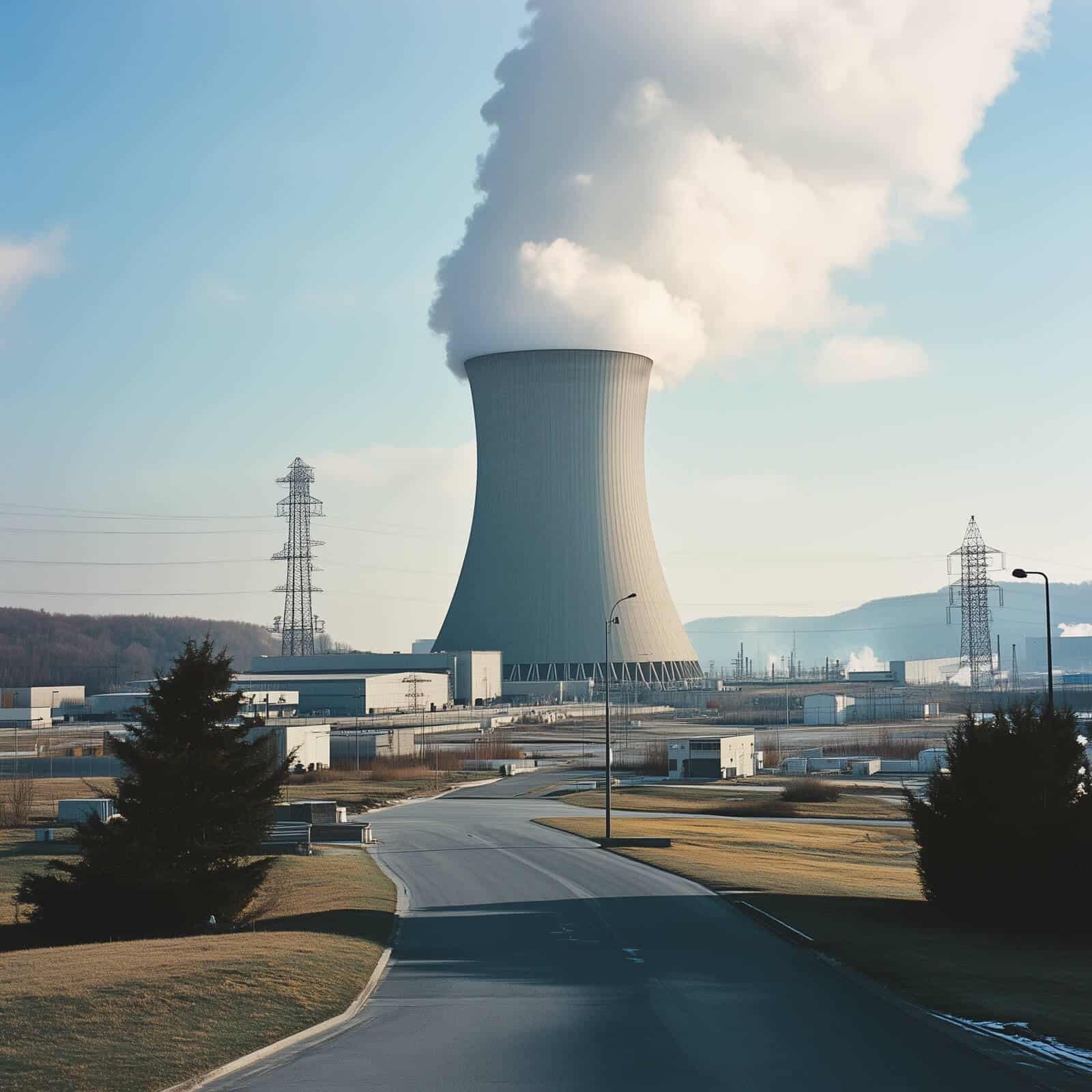
Nuclear: No climate change platform is serious if it doesn’t include nuclear energy, which currently contributes 20% of America’s energy production, and 60% of all its carbon-free energy. Nuclear is safe, reliable, cheap, and most importantly, clean.Renewables: in recent years, renewable energies such as wind and solar power have really taken off, expanding in scale and decreasing in cost. They are zero-carbon forms of energy, and infinitely renewable as long as the sun shines, and the wind blows. Depending on the topological and meteorological conditions, renewable sources will increasingly displace fossil fuels as a clean alternative. Increasingly, this will also be a source of economic growth, as 3.3 million Americans already work in the clean energy sector.

Biomass: Biomass is the transformation of organic material such as plants and trees into fuel. This is most effective when used to dispose of organic material that would otherwise go to waste in landfills, but must be carefully managed to avoid unsustainable deforestation.

Geothermal: America is blessed with large sources of geothermal energy, although it only accounts for 0.4% of energy production now. Given it is renewable, clean, and reliable, we should expand our use of geothermal energy. New drilling and mineral extraction technology, referred to as Enhanced Geothermal Systems (EGS), can scale up our use. Studies suggest that, with reduced regulations, permitting streamlining, and innovation, the sector could grow 26-fold by 2050 - representing a significant boon in the fight to reduce emissions.

Hydro: Hydropower, which is the extraction of clean energy from the flow of water (often via dams or rivers), currently generates 6% of electricity in the U.S. The Dept. of Energy calculates an additional capacity factor of 50% by 2050, which we fully support as an economically-viable, clean energy source.

This is not an exhaustive list of energy sources, but considers the benefits and challenges of some of the major ones. Additionally, we are excited about developments in emerging technologies such as tidal power, hydrogen, and others.

breakthrough technologies

Carbon Capture & Storage (CCS): We are excited by the potential of CCS to remove carbon emissions both from fossil fuel production at source and from the atmosphere more generally. Innovation in this area is crucial to the goal of reducing carbon emissions to Net Zero by 2050. To this end, we support the 45Q tax credit, which incentivizes developers to launch more CCS projects, and urge Congress to extend the credit beyond 2023. 

Artificial Intelligence (AI): We are also excited about the potential of AI, and in particular Machine Learning (ML), to provide us with vital technological options to combat climate change. Through more accurate climate modeling or through computer simulations, which can predict extreme weather occurrences, accelerate the process of scientific discovery, and optimize existing systems for greater energy efficiency, emergent AI technologies are huge assets to combating climate change.

 INTERNATIONAL STRATEGY

u.s. leadership

The U.S. needs to take a leadership role on the international stage to promote positive, market-friendly environmental practice. The United States should engage with partner nations to reduce global greenhouse gas emissions and develop climate adaptation practices. By developing, promoting, and deploying technologies and resources to mitigate and adapt to the effects of climate change, the United States will be a leader and an example to the rest of the world. Moreover, the U.S. can help set international standards beyond climate change, such as tackling air pollution, cleaning up oceans, and revitalizing global ecosystems. In fact, some of the trade deals struck under President George W. Bush’s Trade Act of 2002 established agreements with countries such as Colombia, South Korea, and Peru helped to reduce airborne chemicals, deforestation, illegal logging and more.

leading on innovation

U.S. leadership can be achieved through becoming a pro-enterprise bastion of innovation and new, clean technologies, which we can then export to the rest of the world. As the technology becomes globalized and more developed, downwards pressure on costs and prices will further incentivize other nations to adopt such clean alternatives.

This is a bottom-up international approach, starting with the key actor being the nation-state. We can solve common problems through what is called “polycentric governance,” where localized stakeholders or regional partnerships produce innovative solutions that can then be adopted by other countries. Sovereignty is crucial for nations to be effective in combating climate change. International agreements must adhere to this principle. 

clean free trade

It is not enough for the U.S. alone to develop and use clean energies and technology to combat pollution at home. Climate change is a truly global phenomenon, and as such will require international cooperation.

We fully support the creation of a Sustainable Energy Free Trade Area, within which countries ditch all tariff and non-tariff barriers to the free trade of clean energy sources, as well as relevant transportation technologies and services. Free trade is crucial in tackling the global aspects of climate change.

For example, the U.S. should sign up to the Agreement on Climate Change, Trade, and Sustainability (ACCTS), which proposes exactly these solutions. 

 OCEANS & WATER

marine conservation

Our oceans are some of the most diverse ecosystems on the planet, and they deserve to be protected not only for their intrinsic worth, but also their environmental and economic benefits. Economically, oceans contribute $282 billion to the U.S. economy yearly, and support 3 million jobs, while the fishing industry feeds millions. Yet, fish stocks for example have declined dangerously over the years due to overfishing, and as such we support the introduction of “Individual Transferable Quotas” (ITQ’s) to place sustainable property rights on fish stocks. Environmentally, oceans regulate the Earth’s climate, support around 60% of all animal life, and absorb around 30% of all carbon emissions through processes such as photosynthetic plankton and seaweed. Conserving these benefits through private-public partnerships and greater research is crucial.

ecopreneurship

Ocean plastics are a threat to all marine life. Marine species often die from consuming or becoming entangled in plastic waste pollution. This can be solved by holding dumpers accountable. We can also support ecopreneurs like 4ocean, a company that sells bracelets made of ocean plastic they collect through their ocean cleanup program. 4ocean has removed over 10 million pounds of ocean trash since 2017. The market often finds incentives that fuse both environmental and economic success.

water markets

Freshwater has been an issue for many areas of the country, as it is a valuable and scarce resource. We support the principle of water markets, where buyers and sellers can negotiate over the most efficient use of water resources, through a system of water property rights. In such a system, people and businesses will only use the water that is absolutely essential, and sell their rights to the rest. This encourages innovation and cooperation, decreases costs through competition, and incentivizes the conservation of  water - as every gallon becomes more valuable, to both customer and retailer.

 PUBLIC & PRIVATE LANDS

the national park service

The NPS is one of America’s greatest treasures, and a legacy of what conservative environmentalism looks like, having been founded by Theodore Roosevelt. It supports thousands of jobs around the country, and provides 331 million Americans yearly with a chance to access the great outdoors. For years, the Service was plagued by underfunding and mismanagement, having built up a deferred maintenance backlog of $11.6 billion. This is why the American Conservation Coalition was proud to support the Great American Outdoors Act, recently passed by Congress and adopted into law by President Trump, which addresses the backlog and permanently funds the Land and Water Conservation Fund (LWCF). 

private conservation

In America, lands are not only owned publicly by federal or state governments, but also by private landowners and conservation groups. Organizations such as the National Audubon Society and The Nature Conservancy own thousands of acres of land around the country, for the simple goal of protecting and conserving them. We support policies that incentivize further private conservation, such as through the conservation easement tax deduction, which has exploded charitable conservation efforts to 56 million acres across the United States. Private conservation also requires accurately defining and upholding private property rights, allowing landowners to make important trade-offs between conservation and resource development.

localism

We appreciate that the management of public lands and resources is often best carried-out by local communities. Indeed, Nobel prize-winning economist Elinor Ostrom has shown that such local communities benefit from the decentralized knowledge, accountability, and economic self-interest to improve the conservation of their common-pool resources. This can be applied to anything from grazing lands to fishing stocks.

When it comes to federal lands, they tend to be very mismanaged and underfunded, primarily due to the reasons Ostrom outlined. In the West, the overwhelming majority of public lands are owned by the federal government, rather than the states or private landowners. The fact of the matter is that local land managers of the National Forest Service, the Bureau of Land Management, and other DOI entities are not given enough control over the lands they were hired to manage. The Department of the Interior needs to prioritize local/statewide involvement when talking about how to manage lands, empowering local communities and stake-holders with the necessary knowledge and expertise.

 WILDLIFE

SPORTSMEN

We recognize that hunters and anglers are at the forefront of wildlife conservation efforts, and that their passion is what fuels the long-term sustainability of our wildlife. Firstly, hunting certain animals such as deer plays a vital role in maintaining healthy population levels and protecting vulnerable species, as well as preventing ecosystems from over-use. Secondly, the numerous fees associated with hunting licensing, such as excise taxes or habitat stamps, generate billions in revenue which get reinvested in conservation efforts. Finally, sportsmen have a direct incentive to not kill too many of the animals they hunt, since that would endanger the very sports they love. Similarly, land and wildlife owners have an economic incentive to not let their animals be over-hunted, since that would deplete their long-term income sustainability.

WILDLIFE CONSERVATION

 The enormous breadth of American wildlife contributes to this country’s  incredible ecological diversity. It not only has environmental and spiritual aspects, but also economic value, through the creation of jobs, food supplies, and tourism. Yet, in the last century, American wildlife has increasingly come under threat due to habitat and ecosystem destruction. We strongly support the private and public conservation efforts that aim to protect endangered species, prevent habitat destruction, and restore wildlife populations such as bison, red wolves, and pollinators like butterflies. We also recognize that a mix of federal, state, and community-level cooperation is vital to ensuring the sustainability and recovery of our incredible wildlife.


http://www.acc.eco/ 2020-04-17 hourly 0.8